Are We Looking at the Wrong Signals?
I've been thinking about this a lot recently. The beauty of making the commitment to document signals weekly online, dots are starting to join up.
Partly because of the work we're doing through Citizen Hub. Partly because I spend a lot of time in different towns and communities around the country. Partly because I'm seeing conversations happening behind closed doors that don't quite match the picture we see publicly.
I don't say any of this as someone with all the answers. I'm more curious than certain right now.
I think we're starting to see signals that something deeper is happening beneath the surface of many of our towns and systems.
What's interesting is that the signs aren't always obvious. Some places look like they're doing brilliantly. Strong high street. Independent businesses. Cafés full. Footfall. Activity. On the surface, exactly the kind of place many towns aspire to become.
Yet beneath that, the same place can be carrying enormous and growing pressure, social care demand, institutional exhaustion, fragmented communities, reactive spending and all quietly building underneath.
That disconnect fascinates me. Because it challenges the idea that we can judge the health of a place purely by what we see happening on the high street.
I think we're entering a period where places can look successful externally while becoming increasingly fragile underneath. Not collapsing overnight. Not dramatic failure. Just growing pressure, quietly compounding.
The more I look at it, the more I think one of the biggest challenges over the next decade won't just be financial capacity. It will be civic capacity. Community capacity. The ability for places to actually organise themselves well enough to navigate what's coming.
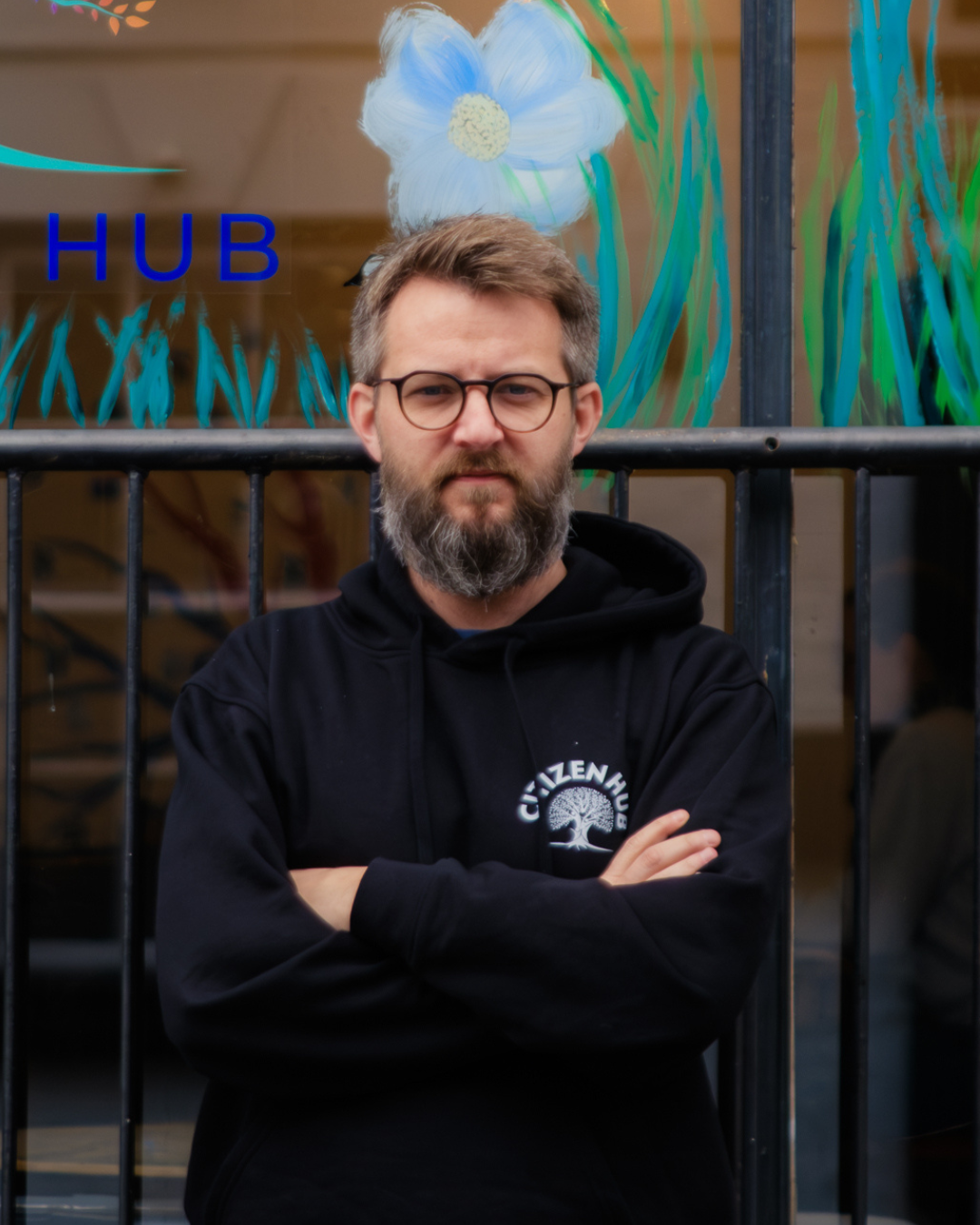
That's one of the reasons Citizen Hub has become so interesting to me. When you're on the ground building community infrastructure, you start seeing a different side of the equation.
If a community-led space facilitates over a thousand hours of therapy support in a quarter, what pressure does that remove elsewhere in the system over time? If isolation-related activities are engaging hundreds of people every week, what future demand does that reduce in social care, health services, crisis intervention? If young people access support, networks, confidence and opportunity earlier, what downstream impact does that have years later?
We haven't even begun to properly calculate the long-term value of prevention and community connection. The problem is that prevention is hard to see. A crisis avoided doesn't generate headlines. But it might save enormous amounts of money, pressure and human difficulty later on.
This is where a place like St Neots becomes interesting beyond its size. Because what we're building through St Neots Initiative isn't just long-term vision for a town. It's becoming an exploration of how places build the capacity to shape change rather than simply react to it.
Change is coming whether we're ready or not. Growth. Infrastructure shifts. AI. Economic transition. Rising expectations with shrinking resources and I'm not convinced the answer can simply be "the council fixes it" or "government solves it." That's not a criticism of institutions. The scale and complexity of what's emerging feels bigger than any single organisation can sustainably carry alone.
Which means communities themselves may need to become more activated, more connected, and more involved in shaping both the challenges and opportunities around them.
That's exactly why we're launching The Big Listen on 5th June through St Neots Initiative. We want to bring the whole town to one table, not because consultation is fashionable, but because communities hold intelligence, observations and ideas that systems consistently miss.
Also, participation creates ownership!
I don't know exactly where all of this leads yet, but I think the towns that thrive over the next decade may not simply be the ones with the best branding, biggest developments or busiest shopping areas.
They might be the places that build trust early, reduce crisis before it escalates, connect people effectively, create visible ways to contribute and help communities feel like they have genuine agency over their own future.
Maybe that's idealistic. Maybe it's necessary. Probably both.
The signals are there.
We just need to start paying attention to what's happening underneath the surface, not just what looks good from the outside.
To join The Big Listen on 5th June, visit https://www.eventbrite.com/e/the-big-listen-one-table-one-town-tickets-1987941819496?aff=oddtdtcreator