The High Street Doesn't Need Saving, It Needs reinventing.
Walk down most high streets today and you'll see the same thing. A vape shop where the bank used to be. A bookmaker where the travel agent was. A row of shuttered units with sun-bleached letting signs that have been there so long they've become part of the furniture.
We've spent a decade diagnosing this. The retail apocalypse, the Amazon effect, business rates, parking charges. The usual suspects are wheeled out, argued over and nothing much changes.
I think we're asking the wrong question. We keep asking how to save the high street as a place to shop. We should be asking what it needs to become.
Here's my answer, it needs to become a place to be and not a destination you visit once a fortnight to pick up something you could have ordered online. A place that has genuine daily gravity. Where people go to learn something, make something, experience something, connect with someone. Where the footfall is generated not by consumer need but by human need.
The retail layer won't disappear. It will shrink, consolidate and survive where it genuinely serves the community. But it cannot be the primary function of the high street anymore. The numbers make that case better than any argument I could make. The UK lost around 13,500 retail outlets in 2024 alone. The British Chambers of Commerce estimates that 40% of retail units will need repurposing in the next five years. That space is coming, the question is what we fill it with.
My proposition is this. At least 15% of high street units should be dedicated to what I call the impact, learning and experience economy. Think community theatres. Indoor skate parks. Digital skills hubs. Health and wellbeing spaces. Employment and enterprise support. Places that are experience-led, skills-focused or directly connected to social health and economic opportunity.
This isn't a niche idea for progressive towns with progressive councils. It's a structural shift that makes commercial sense for everyone on the high street.
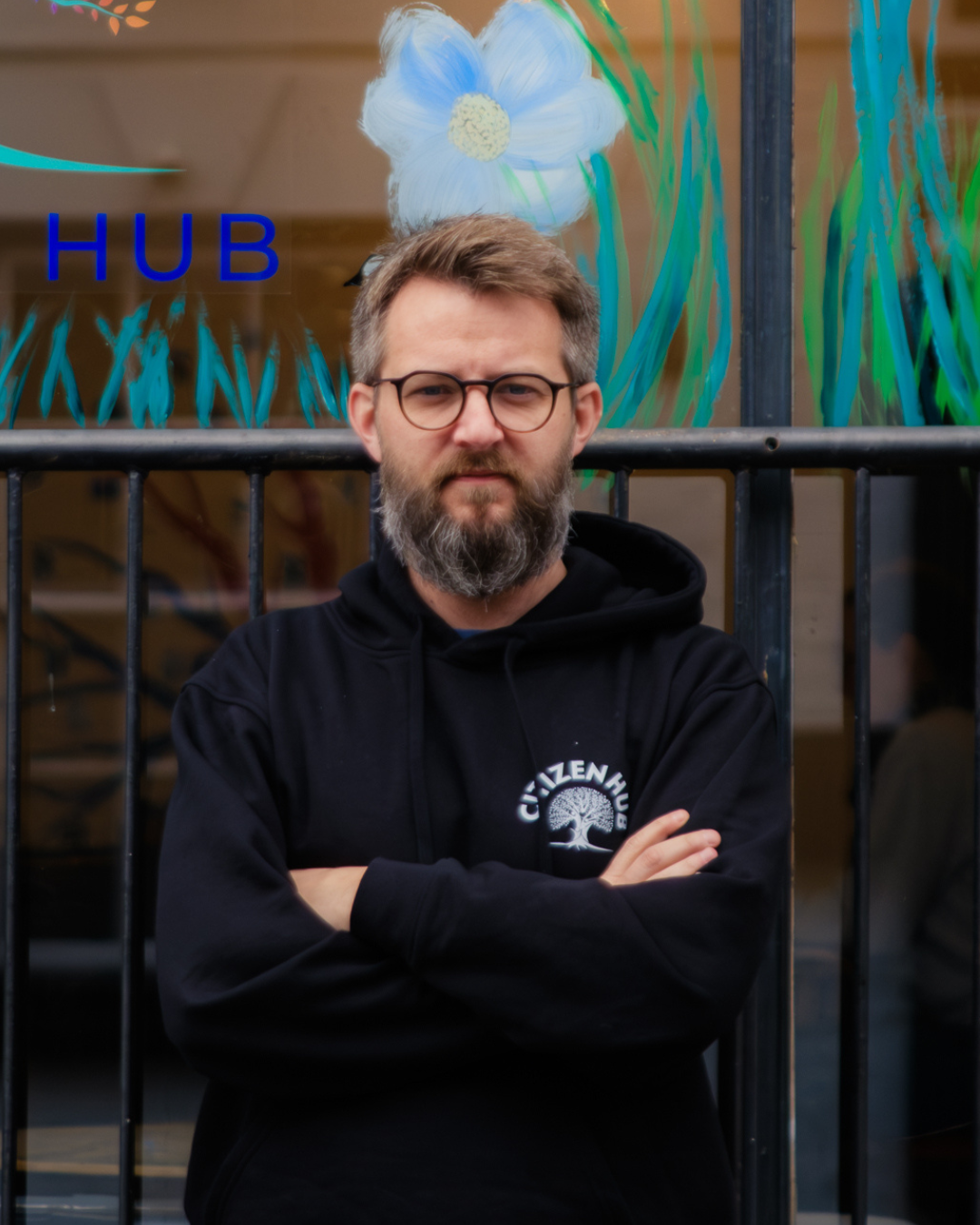
I know this because I've watched it happen. Citizen Hub St Neots sits on the high street of a market town. It's not a shop and it doesn't sell anything. It's a community space where people come for employment support, skills development, connection and opportunity. And the businesses around it have noticed. The restaurants nearby are genuinely pleased to see us succeed because when our doors are open, theirs are busier. The local taxi firm benefits from our visitor flow. The footfall we generate doesn't just serve our members, it quietly subsidises the commercial viability of everything around us. We get about 300 visitors a week now and many of them will spend their time and money in town whilst visiting.
That's the economic argument that the current high street debate is almost entirely missing. Everyone talks about community benefit, fewer people talk about commercial benefit. But the two are not in competition. They are, when you get the model right, the same thing.
There's also a deeper issue at stake here that goes beyond economics. Research now shows a striking correlation between high street decline and political discontent. Communities where vacancy rates are highest are the same communities where trust in institutions is lowest and support for populist politics is highest. The high street is the most visible measure a town has of whether it is thriving or being left behind. When it decays, something else decays with it.
The House of Lords said it plainly in their 2024 report, “the high street's future lies beyond retail.” The government has responded with funding packages, rental auctions and business rates reform. These things matter, but they are levers for a system that is structurally broken. You cannot incentivise your way to a high street that people want to be part of.
What you can do is give communities the infrastructure to generate their own gravity.
This is not about charity or subsidy. The experience, impact and learning economies are real. Skills training, employment support, creative industries, health and wellness, these are sectors with genuine demand and genuine funding streams, from government contracts to corporate partnerships to philanthropy. A well-designed community hub on a high street is not a drain on the local economy. It is an anchor for it.
Towns that get this right in the next ten years will look completely different to towns that don't. Their high streets will have daily footfall. Their local businesses will have a customer base. Their residents will have somewhere that genuinely serves them, not just somewhere to spend money, but somewhere to invest time.
15% is not an arbitrary number. It's a threshold. The point at which the character of a high street begins to shift. Where a trip into town stops being a transaction and starts being something worth making.
We already know what a high street built entirely around retail looks like in 2025.
It's time to find out what the other version looks like. Then we will be saying with a slight smile on our faces, do you remember when that unit was just a vape shop, now look at it!